


As students progress through elementary and middle school, hands-on learning in science, technology, engineering, and math can build confidence and spark curiosity. For families in Texas, the 2026 school year brings a range of after-school STEM options, from LEGO robotics clubs to coding academies and university-led experiments. This guide highlights several programs available in the Dallas-Fort Worth area, Austin, Houston, and beyond, with details on age ranges, session structures, and what makes each unique.
What Makes a Great STEM After-School Program?
Quality after-school STEM programs engage children through experimentation, design challenges, and collaborative problem-solving. Many programs in Texas align their lessons with the Texas Essential Knowledge and Skills (TEKS) standards, ensuring that the activities reinforce what students learn during the school day. Parents often look for age-appropriate content, qualified instructors, and a safe environment where kids can explore at their own pace.
When evaluating a program, consider the session length and duration. Some providers offer one-hour weekly sessions for four to eight weeks, while others run full-semester clubs. Also check whether the program is funded by parent fees, a school’s PTA, or a community grant, as this affects cost and availability.
After-School STEM Programs by Region
The following programs represent a sample of STEM after-school offerings in Texas for the 2025-2026 and 2026-2027 school years. Availability may vary by specific location, so it is best to contact the provider directly.
Dallas-Fort Worth Area
The DFW metroplex has several established STEM enrichment providers.
Mad Science of DFW offers TEKS-aligned after-school programs for children ages 5 to 12. With over 200 hours of content covering topics from engineering to biology, sessions are typically one hour each and last 4 or 8 weeks (customizable between 4 and 12 weeks). Programs are usually paid for by parents, although a school’s PTA may cover the cost. Mad Science serves schools across the DFW area.
Engineering For Kids of Dallas Metro, based in Wylie, Texas, serves children ages 4 to 14. Their after-school classes cover LEGO Robotics, Electronic Game Design, Scratch, Minecraft, and various engineering disciplines such as aerospace, chemical, and civil engineering. They also offer camps, events, and birthday parties. Parents should confirm the specific after-school schedule for their child’s school.
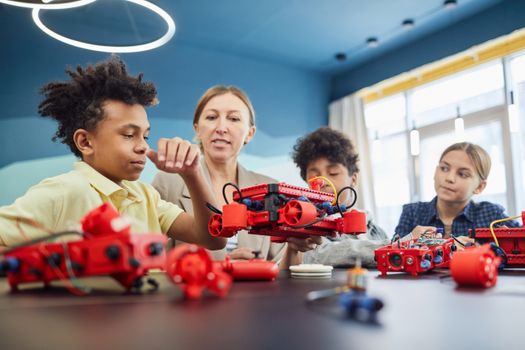
Snapology of Aubrey, Texas provides robotics and STEM after-school programs using LEGO bricks. Their hands-on approach helps elementary and middle school students build motorized models and learn basic engineering concepts. Snapology is located north of Dallas and serves surrounding communities.
STEMTREE North Dallas offers K-12 programs in science, technology, engineering, and math. Their curriculum is designed to supplement school learning with individualized instruction and project-based activities. STEMTREE serves the North Dallas area.
Austin Area
UTeach Outreach at the University of Texas at Austin runs after-school STEM clubs for grades 6 through 8. The program is targeted at 6th graders but is open to grades 6-8 at the teacher’s discretion. Lessons are aligned with TEKS standards. Each club culminates in a Mini STEM competition held on the UT Austin campus. Schools in the Austin area can sponsor a club, and the program is likely free for participating students (cost not specified in available materials). Contact UTeach Outreach directly for details on which schools are eligible.
Houston Area
iCode Pearland offers after-school STEM programs focused on coding, robotics, game design, and artificial intelligence. The curriculum is designed for elementary through middle school students. iCode provides a structured learning environment where students progress through skill levels. Parents in the Pearland and greater Houston area can inquire about current after-school session offerings.
Statewide STEM Enrichment: The Texas Mobile STEM Laboratory
While not an after-school program itself, the Texas Mobile STEM Laboratory operated by the Texas Education Agency in partnership with Learning Undefeated provides free, hands-on STEM visits to Texas public schools for grades K-8. As of the 2025-2026 school year, a fleet of nine mobile units travels across all 20 educational service regions. Schools apply for a visit, and the program is competitive. In spring 2025, 1,024 educators applied, and 30 campuses are selected per educational service area.
The application window for the 2026-2027 school year runs from April 1, 2026 through May 29, 2026. Because this is a school-day activity, parents may want to ask their child’s principal or science coordinator whether the school plans to apply. The experience can complement after-school STEM learning by exposing students to lab equipment and experiments they might not otherwise access.
How to Choose a STEM After-School Program for 2026
With several providers operating across different Texas cities, selecting the right fit requires matching your child’s interests and age with the program’s content and schedule.
Start by considering your child’s age. Programs in this guide range from ages 4 to 14, with some focused on elementary and others on middle school. Next, think about content preferences. Does your child enjoy building with LEGO bricks, writing computer code, or designing robots? Programs like Snapology and Engineering For Kids emphasize LEGO-based robotics, while iCode and STEMTREE offer broader coding and AI topics.
Also evaluate the time commitment. Mad Science sessions are typically an hour per week for a set number of weeks. UTeach clubs meet as a regular after-school club with a culminating competition. Cost is another factor. Mad Science is parent-paid (or PTA-sponsored), while the Texas Mobile STEM Lab is free for schools. For others, contact the provider directly, as pricing was not available in the sources used for this guide.
Finally, check location. Many programs are franchise-based, meaning they serve a specific geographic area. Engineering For Kids covers Wylie and surrounding parts of Dallas Metro. iCode is in Pearland. Snapology serves Aubrey and nearby communities. Mad Science of DFW covers the wider DFW region. Parents should verify that their child’s school or a nearby facility hosts the program.

Frequently Asked Questions
What is the typical age range for after-school STEM programs in Texas?
Most programs serve elementary and middle school students. Mad Science targets ages 5-12, Engineering For Kids serves ages 4-14, and UTeach Outreach clubs are for grades 6-8 (typically ages 11-14). The Texas Mobile STEM Laboratory serves grades K-8 (ages 5-14). Programs like Snapology and iCode also cover elementary through middle school.
Are these programs aligned with Texas school standards?
Yes. Mad Science and UTeach Outreach specifically note that their lessons are aligned with the Texas Essential Knowledge and Skills (TEKS). The Texas Mobile STEM Laboratory is a TEA-operated program, so its content supports state science standards. For other providers, parents can ask about curriculum alignment during enrollment.
How much do after-school STEM programs cost?
Costs vary. Mad Science programs are typically paid for by parents, though a PTA may sponsor. The Texas Mobile STEM Laboratory is free to schools. For Engineering For Kids, iCode, Snapology, STEMTREE, and UTeach Outreach, specific pricing was not available in the sources used for this guide. Contact each provider for the most accurate fee information and any available financial assistance.
Can my school host a Texas Mobile STEM Laboratory visit?
Any Texas public school serving grades K-8 can apply during the annual application window. For the 2026-2027 school year, applications open April 1, 2026 and close May 29, 2026. Schools are selected competitively, with 30 campuses chosen per educational service region. Parents should speak to their school’s administration to express interest.
How can I find more STEM programs near me in Texas?
This guide covers programs in Dallas-Fort Worth, Austin, and Houston, but many other local providers exist. Online directories such as After School Hub list programs by city and category. You can search for additional options using the city and “STEM after-school program” as keywords. Always verify current schedules and availability directly with the program.
